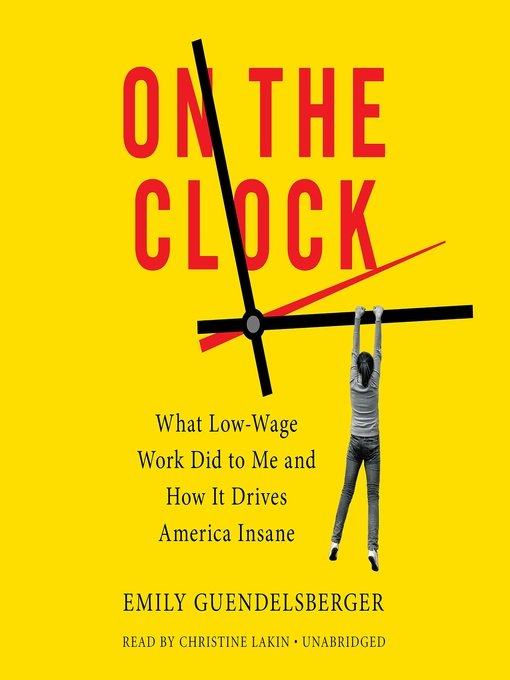
On the Clock
A dive back into non-fiction, Emily Guendelsberger's on the clock is about the working conditions of the working poor. For this, she worked a few months as a picker for Amazon, a call center clerk for Convergys and a restaurant employee for McDonalds. The verdict: Minimum wage work, while never expected to be particularly rewarding, has become a Kafkaesque hellscape. A hellscape made possible by the advent of modern computer systems that allow companies to micromanage every second of every employee's time. In the pursuit of maximum profits these companies (though they're definitely not the only ones) have optimized workflows down to the second, affording their employees no down time. At Amazon, for example, employees are expected to stand on their feet for up to 12 hours, walking up to 12 miles a day. Lunch breaks are 30 minutes, and start the minute you leave your station. The company knows it takes 10 minutes just to leave the building but it doesn't care. Every move is tracked, and an unauthorized moment of rest can get you fired in an instant. The company knows this because every employee carries with them a small, GPS enabled, scanner that can immediately report of a picker has fallen behind on their quota.
On top of that, low-wage employers demand extremely flexible schedules from their employees, requiring they come in at the drop of a hat or be fired. Holidays, sickness, family emergencies, burnout, it doesn't matter. This low-control, high-stress environment is perfectly designed to trigger depression and anxiety in people and is a large part of the reason, Emily postulates, why the mental health of this nation has been steadily worsening.
The book was primarily written to explain to the blissfully ignorant how terrible the conditions at the bottom of the American economy have become. I honestly can't do it justice here. Just go read it.